
HR glossary
Burnout
Burnout is a state of exhaustion, cynicism and reduced effectiveness caused by long-term, unmanaged stress at work.
The World Health Organization describes burnout as an occupational phenomenon caused by chronic workplace stress that hasn’t been successfully managed. It lists three signs: exhaustion, mental distance or cynicism about the job, and reduced effectiveness at work.
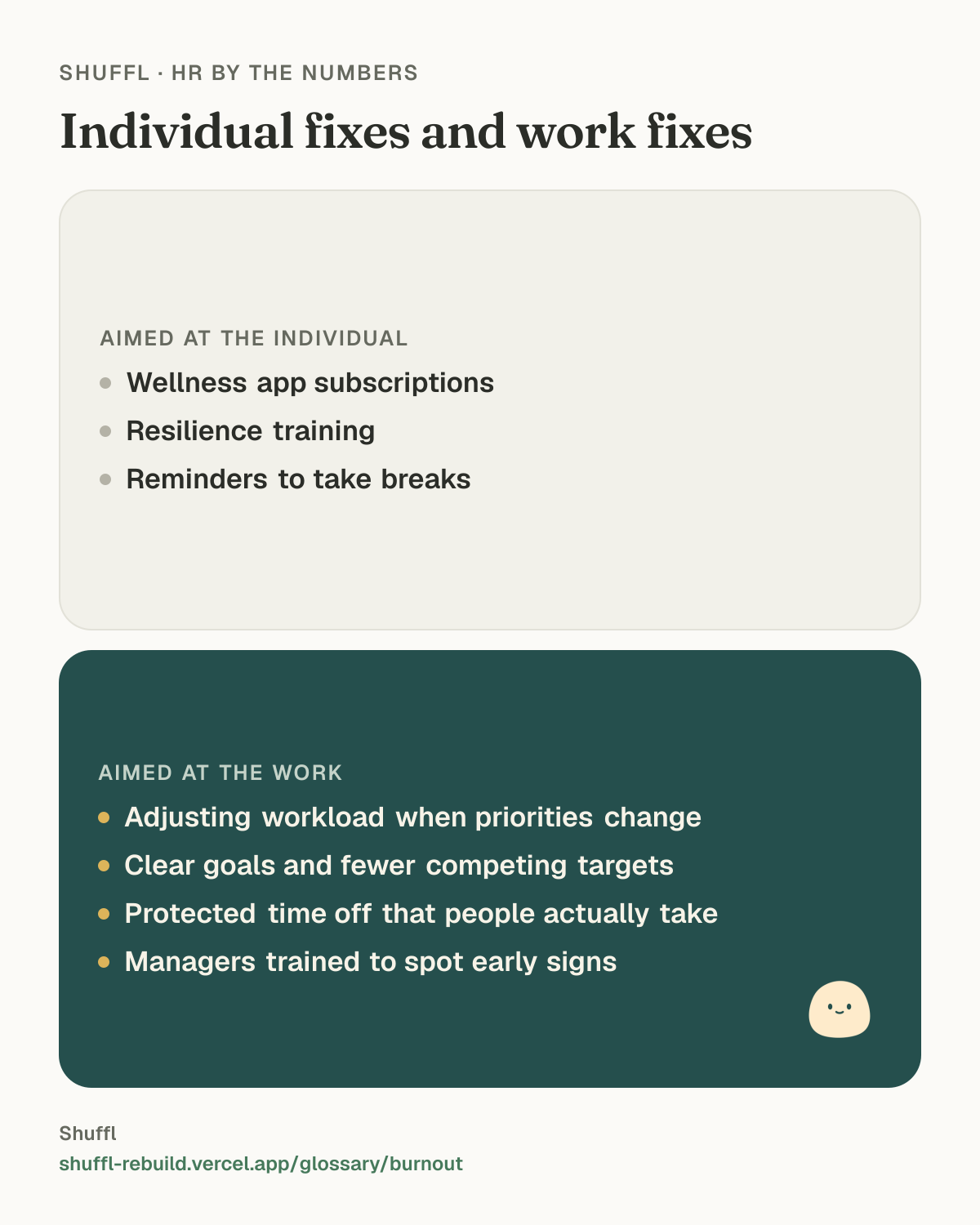
Burnout isn’t fixed by a yoga app. It comes from too much work, too little control, unclear expectations and unfair treatment, so the fixes sit with managers and workload, not with the individual.
What the research says
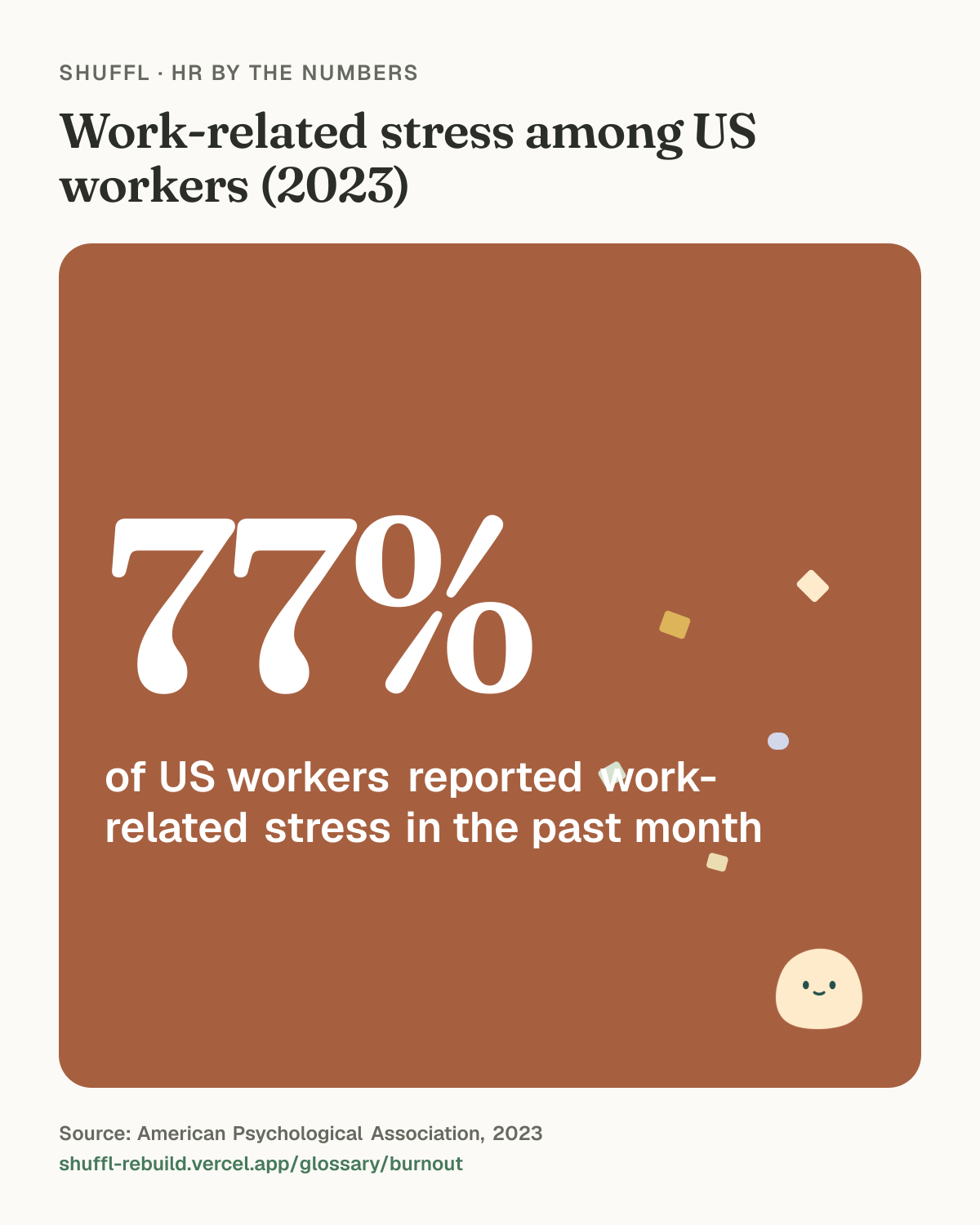
In APA’s 2023 Work in America survey, 77% of US workers reported work-related stress in the past month. 57% reported negative effects sometimes associated with burnout, and the most common was emotional exhaustion, at 31%.1
Some groups report much more of it. In APA’s 2025 survey, 45% of workers living with a disability reported emotional exhaustion at work in the past month, compared with 23% of workers without a disability.2 Team climate matters too: in the 2024 survey, emotional exhaustion was reported by 34% of workers with lower psychological safety and 17% of those with higher.3
The WHO definition in ICD-11 is limited to work. It says burn-out “should not be applied to describe experiences in other areas of life.”4
Shuffl · HR by the numbers
Work-related stress among US workers (2023)

Work-related stress among US workers (2023): 77% of US workers reported work-related stress in the past month. Source: American Psychological Association, 2023.
An example
A 30-person support team at a software company goes through a rough product launch. Over the next quarter, HR notices that overtime has doubled, only 4 of the 30 have taken any time off, and two of the most reliable agents have called in sick more than usual.
The support director asks the team what’s draining them. The answer is a flood of repeat tickets about one bug. She gets engineering to put a fix on the next release, adds two contractors for six weeks, and blocks out a day off for each agent in the following month. Overtime falls back to its old level within eight weeks.
How to reduce burnout
Watch the leading signs at team level: rising overtime, falling time-off use and more short-notice sick days. These usually show up before survey scores drop.
- Ask teams directly which tasks drain them, and remove or delay at least one.
- Check that time off is being used, and follow up with managers whose teams aren’t taking it.
- Give people more say in how and when they do their work where the job allows it.
- Keep the employee assistance program, but treat it as support, since it can’t change workload.
Shuffl · HR by the numbers
Individual fixes and work fixes
Individual fixes and work fixes. Aimed at the individual: Wellness app subscriptions; Resilience training; Reminders to take breaks. Aimed at the work: Adjusting workload when priorities change; Clear goals and fewer competing targets; Protected time off that people actually take; Managers trained to spot early signs.
Common questions
- Is burnout a medical diagnosis?
- Not a medical condition in the WHO’s classification. The WHO calls it an occupational phenomenon, specific to work.
- What are signs of burnout on a team?
- Rising absenteeism, missed deadlines from reliable people, short tempers, and people who stop speaking up in meetings.
Sources
Read on . Numbers change as new studies come out, so check the source before you quote it.
- American Psychological Association, 2023 Work in America Survey: Workplaces as engines of psychological health and well-being, 2023. Online survey by The Harris Poll of 2,515 employed U.S. adults, April 17-27, 2023. Weighted; ±3.1 points at 95% confidence.
- American Psychological Association, 2025 Work in America Survey: The Experience of Working in America During Times of Change, July 2025. Online survey by The Harris Poll of 2,017 employed U.S. adults, March 26 to April 4, 2025. Weighted; ±3.2 points at 95% confidence.
- American Psychological Association, 2024 Work in America Survey: Psychological Safety in the Changing Workplace, 2024. Online survey by The Harris Poll of more than 2,000 employed U.S. adults, March 25 to April 3, 2024. Psychological safety measured with seven items adapted from Edmondson’s scale.
- World Health Organization, Burn-out an “occupational phenomenon”: International Classification of Diseases, May 2019. WHO statement on the ICD-11 definition of burn-out.