
HR glossary
Open enrollment
Open enrollment is the annual period when employees can enroll in, change or cancel their benefits.
Open enrollment is the yearly window, usually a few weeks in the fall for plans starting January 1, when employees can sign up for benefits, change plans or add family members.
Outside that window, changes are only allowed after a qualifying life event, like marriage, a new child or losing other coverage.
Expect a spike in questions. A short summary of what changed from last year, and where to get help, saves HR a lot of repeat answers.
What employees are choosing between
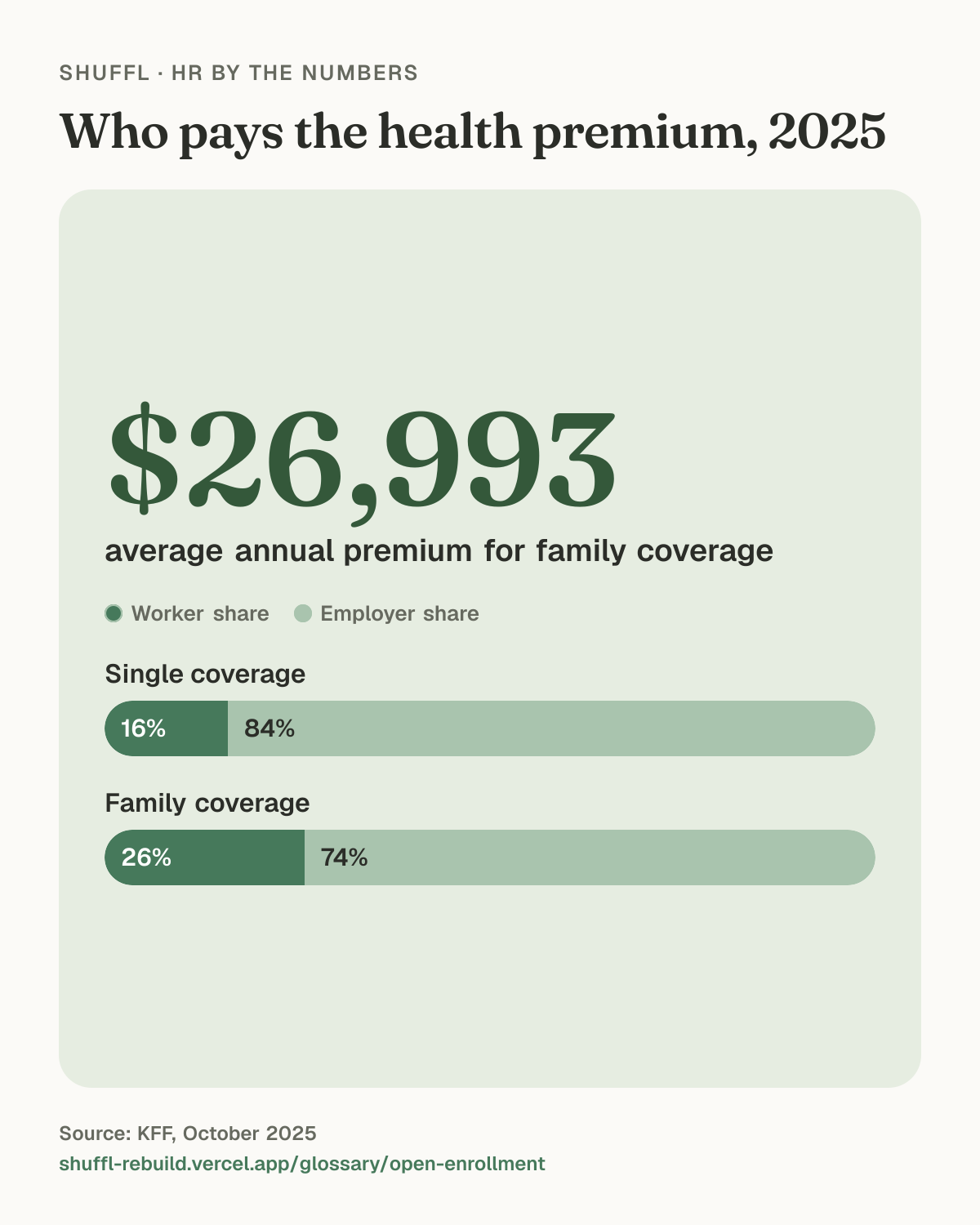
For most people, open enrollment is mainly a health insurance decision. KFF’s 2025 survey of 1,862 employers found average annual premiums of $9,325 for single coverage and $26,993 for family coverage, up 5% and 6% from the year before.1
Workers paid an average of $1,440 a year toward single coverage and $6,850 toward family coverage, which is 16% and 26% of the premium.1 Premium increases are why a clear summary of what changed matters so much. A family switching plans can move their take-home pay by hundreds of dollars a year.
Shuffl · HR by the numbers
Who pays the health premium, 2025
Who pays the health premium, 2025. $26,993 average annual premium for family coverage. Single coverage: 16% Worker share, 84% Employer share. Family coverage: 26% Worker share, 74% Employer share. Source: KFF, October 2025.
Changes outside the window
In the US, federal special enrollment rules let employees join a group health plan midyear after certain events. The Department of Labor lists losing other coverage, marriage, birth, adoption and placement for adoption. After a loss of coverage, the employee must request enrollment within 30 days.2
Coverage after a loss of other coverage or a marriage starts no later than the first day of the next month. For a birth, adoption or placement for adoption it is retroactive to the day of the event.2 Other midyear changes, like to a flexible spending account, depend on the plan’s written terms, so check the plan document before promising anything.
A simple timeline
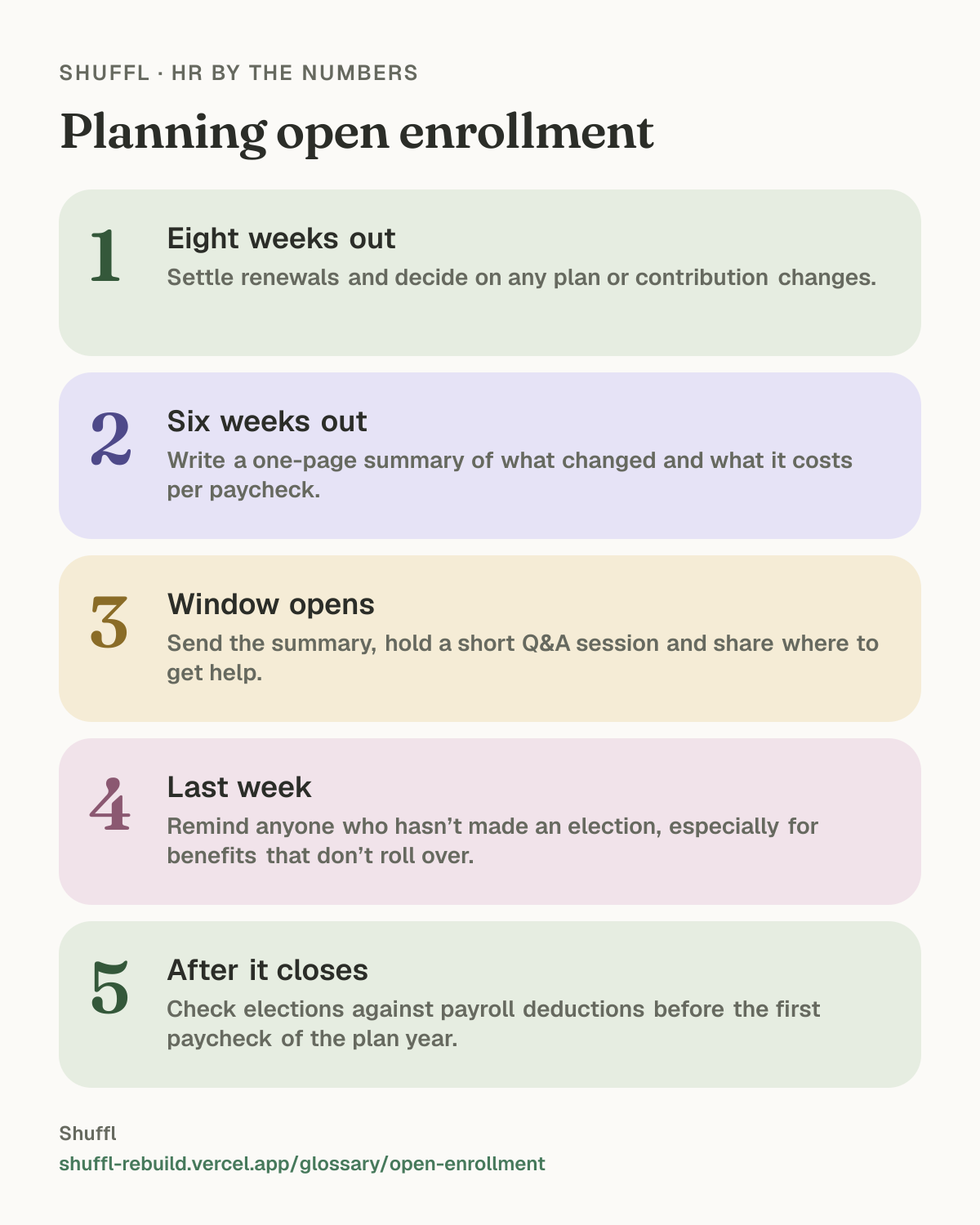
Most of the work happens before the window opens.
Shuffl · HR by the numbers
Planning open enrollment
Planning open enrollment. 1. Eight weeks out: Settle renewals and decide on any plan or contribution changes. 2. Six weeks out: Write a one-page summary of what changed and what it costs per paycheck. 3. Window opens: Send the summary, hold a short Q&A session and share where to get help. 4. Last week: Remind anyone who hasn’t made an election, especially for benefits that don’t roll over. 5. After it closes: Check elections against payroll deductions before the first paycheck of the plan year.
Common questions
- What happens if you miss open enrollment?
- In many plans, the current elections roll over. Some benefits, like flexible spending accounts, require a new election each year.
- What counts as a qualifying life event?
- Marriage or divorce, birth or adoption, a death in the family, or losing other health coverage.
Sources
Read on . Numbers change as new studies come out, so check the source before you quote it.
- KFF, 2025 Employer Health Benefits Survey, October 2025. Interviews with owners and HR and benefits managers at 1,862 non-federal public and private firms with 10 or more workers, conducted January to July 2025.
- US Department of Labor, Employee Benefits Security Administration, Retirement and Health Care Coverage: Questions and Answers for Dislocated Workers, Current DOL publication. Federal regulator guidance on special enrollment rights in group health plans.